
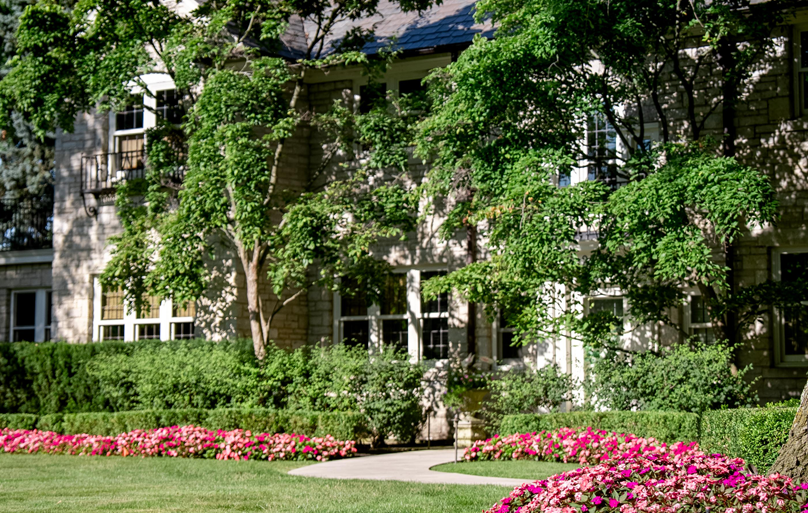
The finest residential landscapes are not designed only for the day they are completed. They are conceived with an understanding of how trees will mature, how gardens will fill in, how materials will weather, and how the needs of a property and the people who live there will evolve.
Across Central Ohio’s established communities, including Upper Arlington, Bexley, New Albany, Dublin, Grandview, and Worthington, many of the most memorable properties share this quality. Their landscapes feel settled, intentional, and increasingly connected to the architecture around them. That does not happen by accident. It begins with thoughtful landscape planning and continues through careful stewardship over many years.
“Every yard tells a story, and the best landscapes are designed so that story becomes richer with time. When the architecture, materials, and plantings are considered for how they will mature together, the landscape becomes more connected to the home and more beautiful with every season.”
— Shawn Rine, Founder & CEO, Rine Landscape Group
A Great Landscape Is Designed for Maturity
Landscape design is unique because its primary materials are living. A tree planted today may ultimately become one of the defining architectural elements of a property. A hedge that initially feels sparse can develop into an elegant screen. Perennial gardens gain depth as plants establish themselves and begin to relate naturally to one another.
Designing for that future requires looking beyond how a landscape appears immediately after installation. Plant selections should account for mature height, spread, form, sunlight, soil conditions, and their relationship to surrounding architecture and other plant material.
This is particularly important on large-scale or renovated residential properties, where the goal is often to create a landscape that feels established rather than newly decorated. Restraint can be just as important as abundance. Giving plants appropriate room to mature often produces a more sophisticated result than filling every available space from the beginning. .
The Landscape Should Begin with the Architecture
The most timeless landscapes rarely feel separate from the home. They reinforce its architecture.
On a traditional residence, that may mean formal geometry, carefully structured planting, natural stone, and materials that complement the character of the home. A contemporary property may call for cleaner lines, greater simplicity, architectural plant forms, and more restrained material selections.
In either case, the objective is not to follow a landscape trend. It is to establish a design language that belongs to the property.
That relationship becomes even more important as the landscape matures. Trees frame architectural views. Hedges establish outdoor rooms. Terraces and pathways connect the home to gardens, pools, entertaining areas, and other destinations throughout the property.
Over time, the distinction between architecture and landscape begins to soften, creating a home that feels connected to its surroundings.
Master Planning Creates the Foundation
One of the most effective ways to create a landscape that improves with time is to begin with a comprehensive landscape master plan.
A master plan considers the entire property before individual projects are undertaken. It establishes relationships among outdoor living spaces, circulation, planting, drainage, irrigation, lighting, architecture, and future improvements.
This becomes especially valuable when a property will evolve in phases. A homeowner may begin with a new terrace and gardens, then add a pool, pavilion, outdoor kitchen, or additional improvements several years later. When those decisions are guided by a larger vision, each new investment contributes to the whole rather than feeling like another feature added to the yard.
For homeowners planning to remain in a residence for many years, this long-term perspective can also reduce unnecessary disruption. Infrastructure for irrigation, drainage, lighting, utilities, and future outdoor spaces can often be anticipated before finished landscapes and hardscapes are installed.
Materials Should Become More Beautiful, Not Simply Older
Plants are not the only elements that change over time. The materials selected for a landscape also influence how gracefully it ages.
Natural stone, quality masonry, thoughtfully detailed woodwork, and well-selected architectural materials can develop character as they weather. Bluestone, limestone, and other natural materials often become more integrated into the surrounding landscape as gardens mature around them.
Craftsmanship is equally important. Proper foundations, carefully executed transitions, thoughtful drainage, precise stonework, and durable construction techniques may not always be the first things a homeowner notices, but they determine how a landscape performs years after installation.
At Rine, we often say the difference is in the details. In a landscape designed for longevity, those details become increasingly important with time.
Outdoor Spaces Should Evolve with the Family
A well-designed landscape should also accommodate changes in how the property is used.
A young family may initially prioritize open lawn, a swimming pool, or spaces for children. Years later, entertaining, gardening, relaxation, or quieter outdoor rooms may become more important. The best landscape plans provide enough structure and flexibility to evolve without requiring the entire property to be reinvented.
This is one reason thoughtfully defined outdoor rooms can be so successful. Terraces, gardens, seating areas, fire features, pools, and other destinations can have distinct purposes while remaining part of a cohesive environment. Their use can change over time without compromising the overall design.
The result is a landscape that continues to serve the homeowner rather than becoming frozen around a particular moment in life.
Stewardship Is Part of the Design
Even an exceptional landscape cannot simply be installed and left to mature on its own. How it is cared for has a significant influence on what it eventually becomes.
As trees grow, sunlight patterns change. Shrubs mature and may need selective pruning rather than routine shearing. Perennials need division and editing. Irrigation requirements change as root systems establish. Plant material may occasionally need to be relocated or replaced as conditions evolve.
This is where the distinction between landscape maintenance and landscape stewardship becomes important.
Stewardship considers the original design intent while continually evaluating how the property is developing. Instead of simply responding to what needs attention today, it asks what decisions will help the landscape perform better three, five, or ten years from now.
For larger residential properties, that continuity of care can be particularly valuable. A team that understands the history and vision of the landscape is better positioned to recognize small changes before they become significant problems and to guide the property through each stage of maturity.
A Mature Landscape Has a Different Kind of Luxury
There is a quiet confidence to a landscape that has been given time to mature well.
Large trees provide scale that cannot be recreated overnight. Gardens develop layers and depth. Stone begins to settle naturally into its surroundings. Hedges create privacy and enclosure. Outdoor rooms feel less constructed and more like an inherent part of the property.
This is a different expression of luxury than simply adding more features. It comes from proportion, craftsmanship, restraint, continuity, and time.
For discerning homeowners, the objective should not necessarily be to create a landscape that looks finished immediately. It should be to create one with the foundation to become increasingly beautiful.
Creating a Landscape for the Years Ahead
At Rine Landscape Group, we approach residential landscapes with a long-term perspective. Through thoughtful planning, detailed construction, and ongoing residential estate management, we help homeowners create landscapes that complement the architecture of their homes, support the way they live, and continue to evolve gracefully.
The true measure of a successful landscape is not simply how it looks when the final plant is installed. It is how the property feels years later, when trees have matured, gardens have developed character, and every element feels increasingly connected.
Because the most enduring landscapes are not just designed to last. They are designed to become better with time.