
Fall Is the Critical Season for Landscape Investment
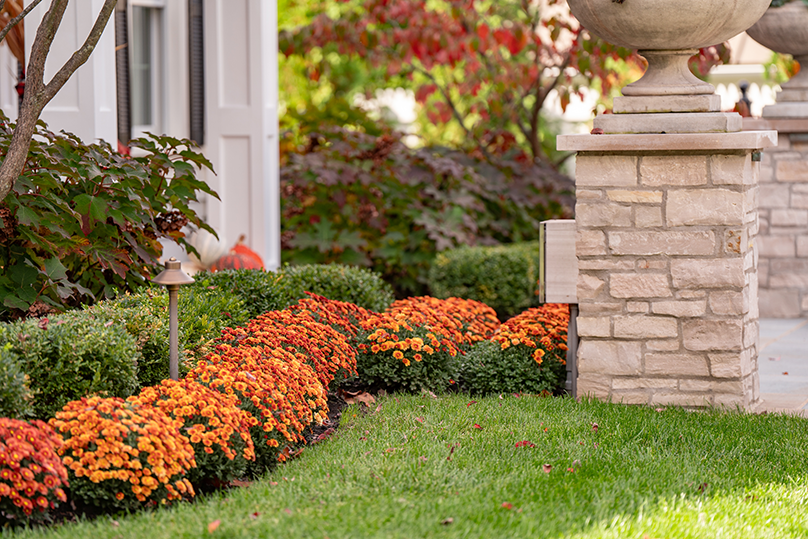
For many homeowners, spring feels like the natural time to think about the landscape. Gardens begin to emerge, outdoor spaces return to use, and attention naturally turns outside. Yet for estate landscapes and larger residential properties, some of the most important decisions should begin months earlier.
Across Central Ohio, from established homes in Upper Arlington, Bexley, Grandview, and Worthington to larger residential properties in New Albany and Dublin, fall provides a valuable window for evaluating how a landscape has performed, making strategic improvements, and preparing for the seasons ahead. Cooler temperatures can create favorable conditions for many types of planting, while the end of the growing season offers something equally important: perspective.
By fall, the landscape has revealed what is working, what is struggling, and where thoughtful investment can make the property more beautiful, functional, and resilient over time.
“Fall gives us an opportunity to look at the landscape after an entire growing season and make thoughtful decisions about what comes next. It is one of the best times to invest not simply in how a property will look next spring, but in how it will continue to develop for years to come.”
— Shawn Rine, Founder & CEO, Rine Landscape Group
Fall Reveals What the Landscape Needs
One advantage of evaluating a residential landscape in the fall is that homeowners and landscape professionals can see how the property performed through spring growth, summer heat, heavy rain, periods of drought, and months of regular use.
Areas of thin turf become apparent. Plantings that struggled in excessive sun or shade can be evaluated. Drainage concerns may have revealed themselves during summer storms. Irrigation coverage can be assessed based on how plants responded during periods of heat. Outdoor living spaces can also be reconsidered after a full season of entertaining and everyday use.
A fall review may reveal that a terrace needs more afternoon shade, a mature planting bed needs better irrigation coverage, or a pathway does not connect destinations as naturally as anticipated. These observations create an opportunity to make informed decisions rather than simply reacting to individual problems.
On a thoughtfully managed property, fall becomes a natural time to step back and ask broader questions. Are gardens maturing as intended? Has privacy developed sufficiently? Are trees and shrubs properly scaled to the architecture? Are outdoor spaces functioning the way the family expected? Are there parts of the landscape that could become more useful or beautiful?
The answers often form the foundation for the next phase of landscape investment.
Fall Is an Important Time for Trees and Shrubs
For many trees and shrubs, fall can offer favorable planting conditions in Central Ohio. Cooler air temperatures reduce some of the environmental stress associated with summer planting, while soil can remain warm enough for root development to continue.
That combination can allow new plant material to begin establishing before winter dormancy and position it to take advantage of the following spring growing season. Planting timing still depends on the species, soil conditions, weather, and site preparation.
For estate landscapes, planting decisions should extend beyond filling an empty bed. A strategically placed tree can frame a view, provide shade, establish privacy, strengthen the arrival experience, or eventually become an architectural element within the property. Hedges can define outdoor rooms and soften boundaries, while carefully selected specimen plants can provide structure and character throughout the year.
The greater the investment, the more important it becomes to consider how those plants will look not only when installed, but five, ten, or twenty years later. Fall planting is therefore as much about planning for maturity as it is about immediate appearance. .
A Better Lawn Often Begins in Fall
A beautiful lawn provides the visual foundation for many of Central Ohio's finest residential landscapes. It creates contrast with garden beds, establishes negative space around architecture, and connects different areas of a property.
Fall can be an important period for renovating lawns that have experienced summer stress. Cooler conditions and seasonal moisture may provide an opportunity to address thin areas, improve turf density, and prepare lawns for stronger performance in the following year.
More importantly, recurring turf problems should be evaluated rather than repeatedly treated at the surface. Poor drainage, excessive shade, soil conditions, irrigation deficiencies, compaction, or inappropriate turf selection may be contributing to the problem.
An exceptional landscape is rarely created by repeatedly correcting symptoms. It improves when the underlying conditions are understood.
Irrigation and Drainage Deserve a Season-End Review
Water management is one of the most important and least visible elements of a successful landscape.
By fall, irrigation systems have been tested through the most demanding months of the year. Areas receiving too much or too little water are often easier to identify, as are sprinkler heads affected by plant growth, changing grades, or other conditions.
Fall also provides an opportunity to evaluate how the property handled seasonal rainfall. Persistent wet areas, erosion, standing water, or runoff across hardscape surfaces can indicate drainage conditions that deserve attention.
For larger residential properties, irrigation and drainage should not be viewed independently. They are part of a broader water-management strategy that affects lawns, gardens, mature trees, hardscapes, structures, and the long-term health of the property. Addressing those concerns before another growing season can protect both the landscape and the investment surrounding it.
The End of the Season Is the Right Time to Evaluate Outdoor Living
A full season of use often reveals more about an outdoor space than a drawing ever could. Perhaps a terrace needs more shade during the afternoon. An entertaining area may benefit from greater privacy. A pathway may not connect destinations as naturally as anticipated. The family may find itself using the fire feature constantly while another part of the property receives little attention.
Rather than immediately adding another feature, fall is an opportunity to consider how the entire outdoor environment is working. For some homeowners, the answer may be a new pool, pavilion, outdoor kitchen, or garden. For others, a smaller intervention involving lighting, planting, circulation, or furnishings may dramatically improve the experience.
The most successful landscape investments begin with understanding how people actually live on the property. .
Fall Is Also a Planning Season
Perhaps the greatest advantage of thinking about landscape investment in the fall is time.
Homeowners who wait until the first warm days of spring to consider a significant landscape project may discover that design, material selection, permitting, scheduling, and construction all require more lead time than expected.
Beginning conversations in the fall creates the opportunity to be deliberate. A landscape master plan can be developed or revisited. Priorities can be established. Budgets can be considered thoughtfully. Materials can be selected for their relationship to the architecture rather than simply their availability. Projects can be sequenced appropriately, and infrastructure for future improvements can be anticipated before finished areas are disturbed.
For homeowners considering substantial changes to their property, fall and winter can be among the most productive seasons for landscape planning.
Invest in the Landscape as a Whole
Estate landscapes rarely benefit from a collection of unrelated improvements. A new terrace affects circulation. A pool influences grading, drainage, privacy, planting, and lighting. A mature tree may shape both the garden beneath it and the views from inside the home. An irrigation improvement may influence the health of an entire section of the property.
This interconnectedness is why Rine Landscape Group approaches residential landscapes as complete environments. A thoughtful landscape master plan considers architecture, horticulture, hardscape, irrigation, drainage, lighting, outdoor living, and long-term care together.
Even when improvements are completed over several years, a larger vision allows each investment to contribute to the next. The result is a property that becomes increasingly cohesive rather than more complicated over time.
Protecting What Has Already Been Created
Fall landscape investment is not limited to adding something new. For established properties, protecting what already exists can be equally important.
Mature trees, carefully developed gardens, natural stonework, lighting systems, irrigation, and outdoor living environments represent substantial investments accumulated over many years. Seasonal care helps preserve their health and condition while identifying concerns before they become more significant.
This is where Residential Estate Management differs from traditional landscape maintenance. Maintenance addresses the tasks required today. Estate management considers how each decision affects the long-term character and performance of the property. It means knowing the landscape well enough to recognize when conditions are changing and having a plan for how the property should continue to evolve.
Thinking Beyond Next Spring
It is easy to evaluate a landscape by asking how it will look next season. The more important question is how it will perform and mature over the next decade. At Rine Landscape Group, we believe every yard tells a story. Fall provides an opportunity to consider what the next chapter should be.
For homeowners throughout Central Ohio, thoughtful fall landscape planning can strengthen plant health, address infrastructure concerns, improve outdoor living, protect existing investments, and establish a clear direction for future enhancements.
The most enduring landscapes are rarely the result of one dramatic transformation. They are shaped by a series of thoughtful decisions, made at the right time and with a clear understanding of the property as a whole.
And when it comes to making those decisions, fall may be the most important season of all.
About the Author:
In 2001, Shawn Rine decided he would like to earn a little pocket change. With a used mower and lots of hard work, he got his neighbors' yards into shape in no time. Nearly two decades later, Rine Landscape Group has a few more mowers – not to mention a staff of certified landscape specialists and an extensive portfolio of innovative, functional landscape projects in neighborhoods all over the Greater Columbus Metro Area.